

oramorph
maximum dose of oramorph in 24 hours
Maximum Dose of Oramorph in 24 Hours: Understanding Daily Limits and Safety
What is the maximum dose of Oramorph in 24 hours? This is an important question for patients prescribed morphine oral solution.
Oramorph contains morphine sulfate, a powerful opioid painkiller used to treat severe pain under medical supervision.
For the standard 10mg/5ml morphine sulfate oral solution, UK prescribing information lists a maximum adult dose of 120mg per day. However, this is a product-specific prescribing reference, not a safe amount for everyone. A doctor may prescribe a different amount depending on clinical circumstances.
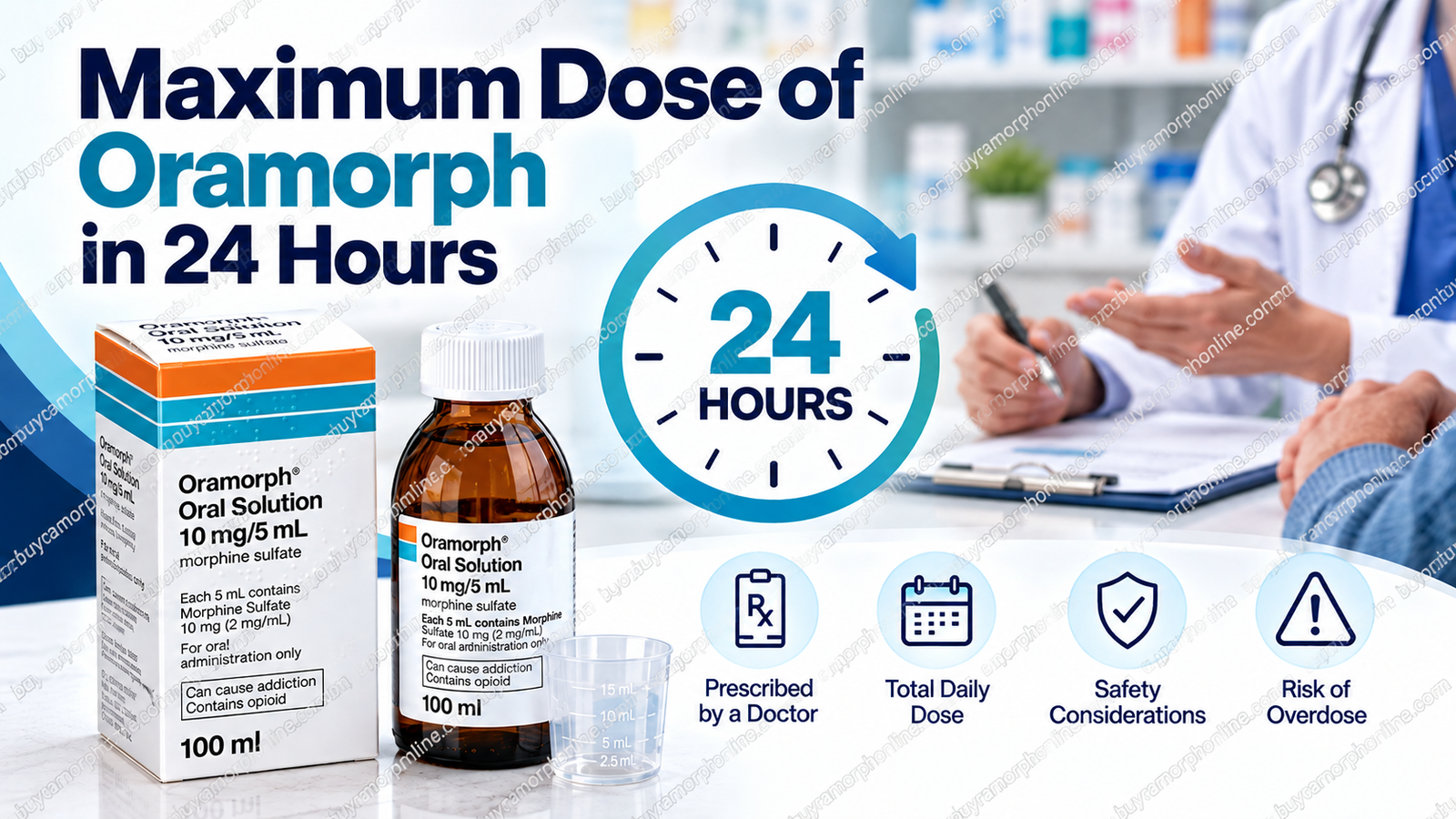
Patients should never increase their prescribed dose or use a published maximum as their personal dosing instructions.
At BuyOramorphOnline.com, our educational resources explain Oramorph, prescription requirements and essential patient safety considerations.
What Is the Maximum Dose of Oramorph in 24 Hours?
The maximum daily amount of Oramorph depends on the formulation, the patient’s medical condition, previous opioid exposure and individual prescription.
According to UK prescribing information for morphine sulfate 10mg/5ml oral solution, the standard maximum adult daily dose is 120mg in 24 hours.
The same official guidance states that a healthcare professional may adjust treatment according to the severity of pain and the patient’s previous analgesic requirements.
This means there is no single 24-hour amount that can be assumed safe for every patient.
For some people, a substantially lower amount may cause serious harm.
The maximum amount you should take is the amount permitted by your own prescription and treatment plan.
Understanding Oramorph Strengths and Concentrations
Oramorph is a brand of morphine sulfate medicine.
Oral morphine preparations may be available in different strengths and concentrations.
For example:
| Formulation | Morphine concentration |
|---|---|
| Oramorph oral solution 10mg/5ml | 2mg/ml |
| Concentrated morphine oral solution 20mg/ml | 20mg/ml |
These concentrations are significantly different.
A concentrated preparation contains more morphine in each millilitre than a standard oral solution.
Confusing the concentrations can cause a dangerous overdose.
Patients must check their medicine label and use the measuring equipment recommended by their pharmacist.
Never switch between morphine formulations or calculate a replacement dose without professional guidance.
What Determines the Maximum Daily Dose?
Healthcare professionals consider several factors before prescribing Oramorph.
1. Severity and Cause of Pain
The underlying medical condition influences the overall treatment plan.
Morphine may be prescribed following serious injuries, for severe postoperative pain, in cancer care or during palliative care.
The appropriate treatment varies according to the patient’s needs.
2. Previous Opioid Use
A patient who has never taken an opioid may respond differently from someone who has received regular opioid treatment.
Previous exposure influences tolerance and the risk of adverse effects.
A dose tolerated by one patient could cause a medical emergency in another.
3. Age and General Health
Older or medically frail patients may be more sensitive to morphine.
Prescribers consider age, overall health and other relevant medical conditions when determining appropriate treatment.
4. Kidney and Liver Function
The kidneys and liver influence how morphine and its metabolites are processed.
Certain medical conditions may increase the risk of medicine accumulation and adverse effects.
A healthcare professional may need to adjust treatment accordingly.
5. Other Medicines
Morphine can interact with medicines that cause sedation.
Combining morphine with benzodiazepines, certain sleeping medicines, other opioids or alcohol can increase the risk of dangerous breathing problems.
Patients should always provide their healthcare professional with an accurate list of medications and substances they use.
How Is Total Oramorph Use Assessed Over 24 Hours?
When reviewing opioid treatment, clinicians consider the total amount of morphine received over a 24-hour period.
This may include regularly prescribed morphine and additional doses authorised for breakthrough pain.
Regularly Prescribed Morphine
Some patients have scheduled opioid treatment as part of their pain management plan.
Breakthrough Pain Medication
Breakthrough pain refers to a temporary increase in pain despite ongoing treatment.
A healthcare professional may prescribe immediate-release morphine for these episodes.
Additional prescribed doses must be considered when the clinician assesses the total opioid exposure over 24 hours.
Different Morphine Formulations
Some patients receive more than one formulation, such as modified-release morphine alongside an immediate-release oral solution.
These medicines cannot simply be treated as separate, unrelated prescriptions when considering overall opioid exposure.
Patients should follow their written treatment plan rather than independently combining or adjusting medicines.
If the instructions are unclear, contact the prescribing healthcare professional or dispensing pharmacist.
Can the Maximum Dose of Oramorph Be Increased?
Sometimes a healthcare professional may adjust morphine treatment when clinically appropriate.
The official prescribing information allows dose adjustments under medical supervision, considering pain severity and previous analgesic treatment.
However, increasing morphine also increases the potential for serious side effects.
A dose adjustment should follow an individual clinical assessment and appropriate monitoring.
Patients must never increase Oramorph because pain persists, because they have developed tolerance, or because they have found a higher dose mentioned online.
If pain is not adequately controlled, contact the prescriber for reassessment.
What Happens if You Take Too Much Oramorph?
Taking more Oramorph than prescribed can cause a potentially fatal opioid overdose.
The amount that causes an overdose differs between individuals.
Therefore, an overdose cannot be reliably identified by comparing the amount taken with a general daily maximum.
Warning Signs of an Oramorph Overdose
Possible symptoms include:
-
Slow, shallow or stopped breathing.
-
Extreme drowsiness.
-
Difficulty waking the person.
-
Loss of consciousness.
-
Blue or grey lips or skin.
-
Unusual snoring or gurgling sounds.
-
Very small pupils.
If an opioid overdose is suspected, call emergency services immediately.
Give naloxone if it is available and you know how to use it, following its instructions. Do not delay emergency medical assistance.
Even if symptoms improve after naloxone, emergency assessment remains essential.
If someone has taken more morphine than prescribed but has no symptoms, they should still obtain urgent medical advice.
Can Oramorph Cause Dependence?
Yes. Regular morphine treatment can lead to tolerance and physical dependence. Morphine also has the potential to cause addiction.
Tolerance means the body becomes less responsive to a medicine over time.
Physical dependence means withdrawal symptoms can develop if regular treatment is stopped abruptly.
These conditions are different from addiction, although they can overlap.
Patients who believe their Oramorph treatment is becoming less effective should discuss the situation with their prescriber.
Do not independently increase the medicine or suddenly stop regular treatment.
Important Precautions When Taking Oramorph
Responsible opioid treatment requires clear prescription instructions, appropriate monitoring and awareness of possible side effects.
Patients should:
-
Take Oramorph exactly as prescribed.
-
Use a calibrated oral syringe or the recommended measuring device.
-
Never use household spoons to estimate liquid medicine.
-
Avoid alcohol while taking morphine.
-
Check for possible medicine interactions.
-
Keep the medicine securely stored.
-
Never share prescribed opioids.
-
Contact a healthcare professional about uncontrolled pain or troublesome side effects.
For more information, visit our Oramorph Patient Safety page.
Frequently Asked Questions About the Maximum Dose of Oramorph
What is the maximum adult dose of Oramorph in 24 hours?
UK prescribing information for morphine sulfate 10mg/5ml oral solution lists a standard adult maximum of 120mg per day, with the possibility of medical adjustment. This is not an individual dosing recommendation.
Is 120mg of Oramorph safe for everyone?
No. A much lower amount could cause serious harm, especially in someone who is not accustomed to opioids or has certain medical conditions. Always follow the individual prescription.
Can Oramorph be taken more frequently if the pain becomes severe?
Do not change the prescribed interval or take extra medicine without professional advice. Contact your prescriber if treatment is not controlling your pain.
Does the maximum dose depend on Oramorph strength?
The prescribed amount must account for the medicine’s concentration. Different oral morphine strengths are not interchangeable, and errors can cause overdose.
What if I accidentally take more Oramorph than prescribed?
Seek urgent medical advice immediately, even if you feel well. If you develop slow breathing, severe drowsiness, collapse or loss of consciousness, call emergency services.
Can a doctor prescribe more than the standard daily maximum?
Official prescribing information allows certain adjustments under medical supervision. Such decisions require individual clinical assessment and should never be made by the patient.
Can Oramorph be combined with slow-release morphine?
Some patients are prescribed both immediate-release and modified-release morphine. This requires a carefully managed treatment plan because both contribute to overall opioid exposure.
Can long-term Oramorph use cause withdrawal symptoms?
Yes. Physical dependence can develop, and suddenly stopping regular morphine treatment may trigger withdrawal symptoms. Treatment changes should be supervised by a healthcare professional.
Where to Find Reliable Oramorph Dosage Information
The safest source of individual dosing information is the prescription issued by a qualified healthcare professional.
Patients can also consult the patient information leaflet included with their medicine.
For general information, the following resources are useful:
You can also read our Oramorph Prescription Guidance and Oramorph Frequently Asked Questions.
Conclusion: Understanding the Maximum Dose of Oramorph in 24 Hours
The maximum dose of Oramorph in 24 hours cannot be determined safely from a general internet article alone.
Although UK prescribing information for morphine sulfate 10mg/5ml oral solution identifies a standard adult maximum of 120mg per day, this is not a universal safe limit.
Individual prescriptions may require lower amounts, and any medically appropriate adjustments must be made under professional supervision.
Understanding the medicine’s strength, following prescription instructions and recognising overdose warning signs are essential parts of patient safety.
For personalised dosing advice, always consult your prescriber or pharmacist.
Medical disclaimer: This article provides general education and does not replace professional medical advice. Never use published dosage information to calculate or change your own Oramorph prescription.
