


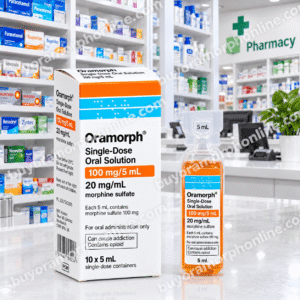
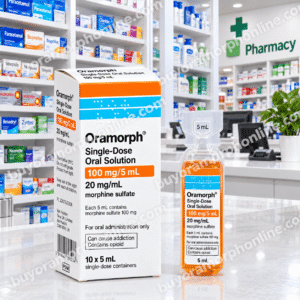
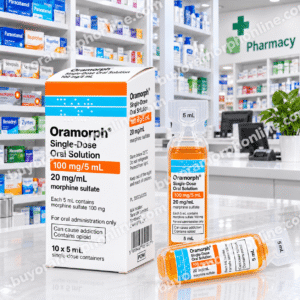
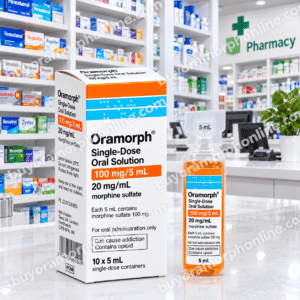
Oramorph single dose 100 mg/5 mL
£199.00
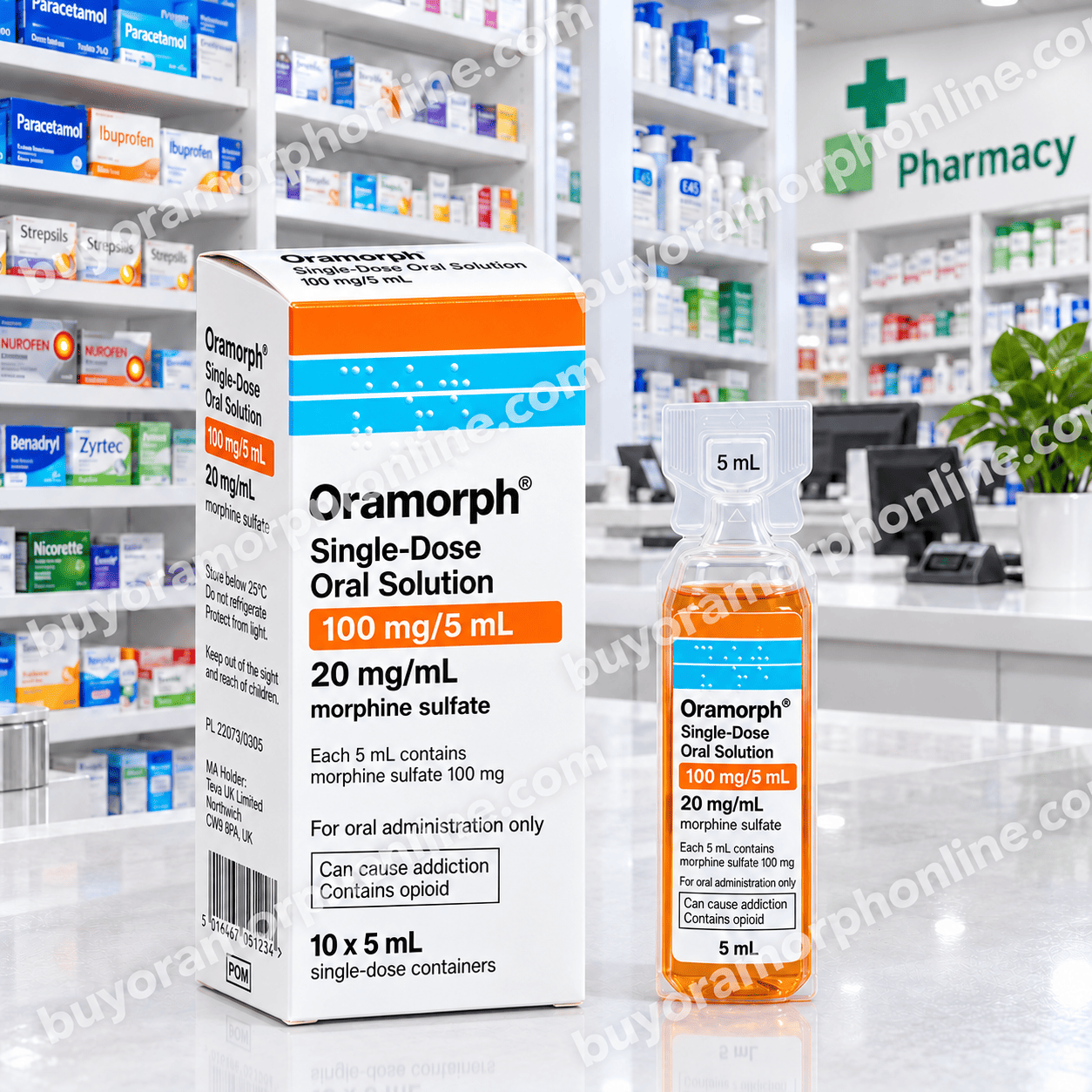
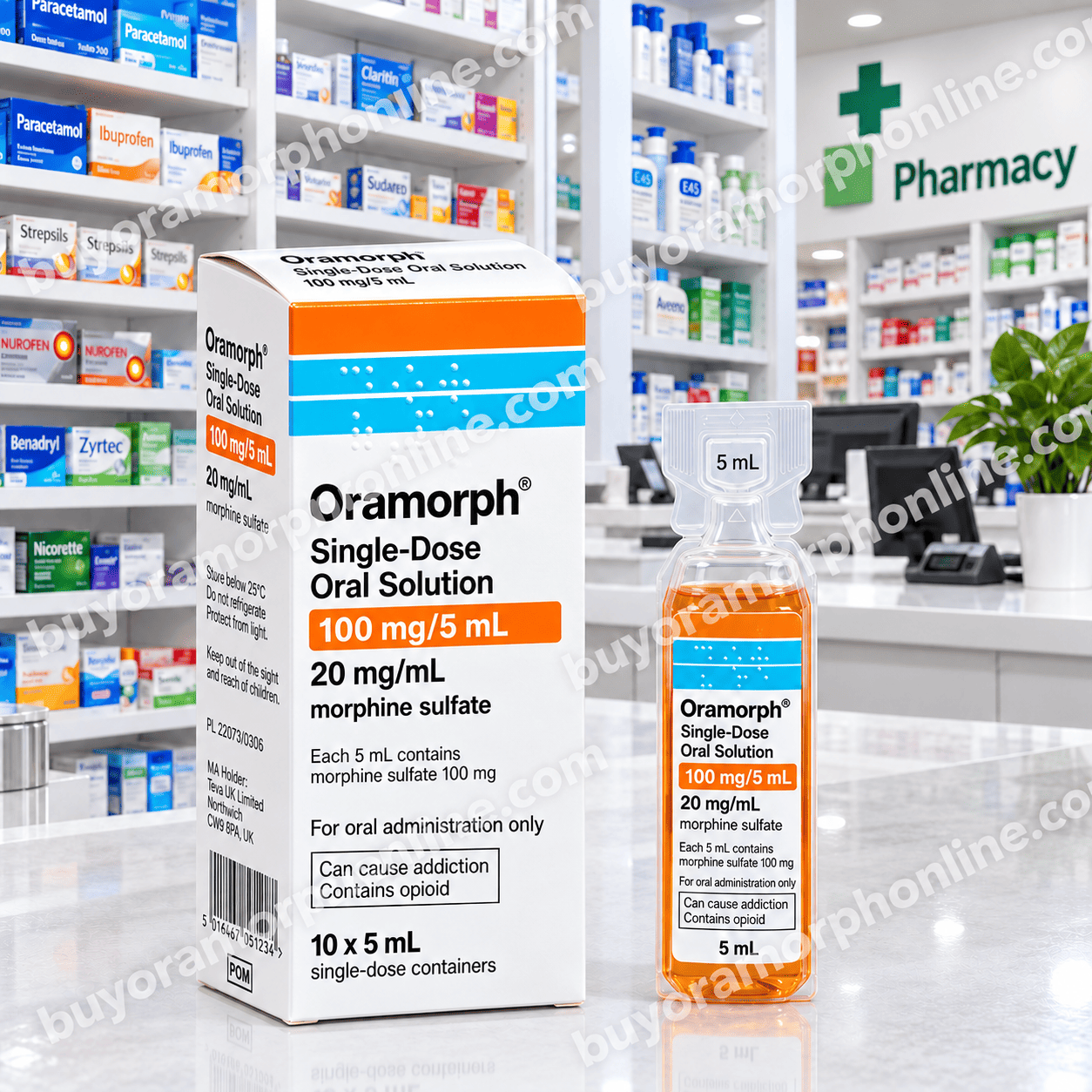
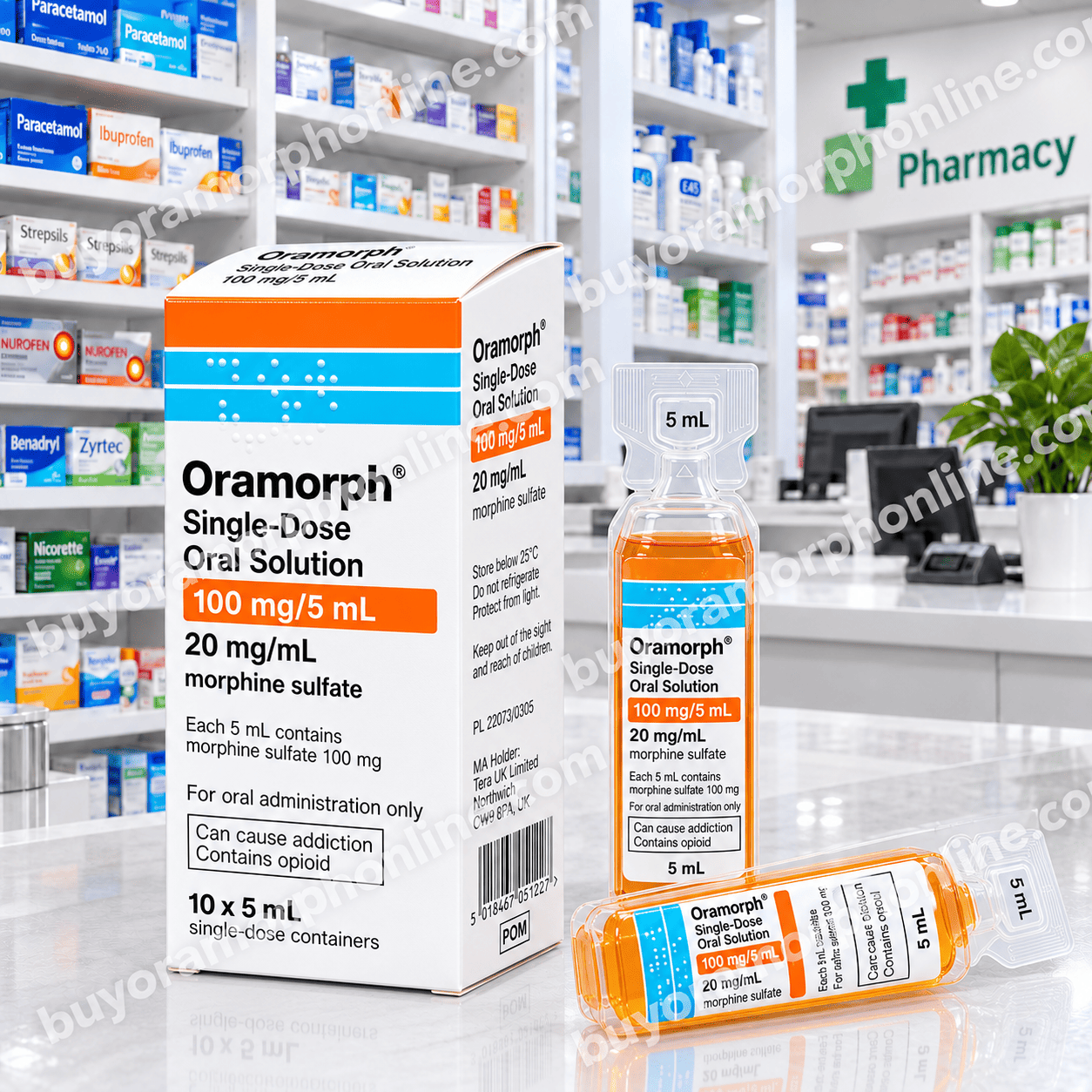
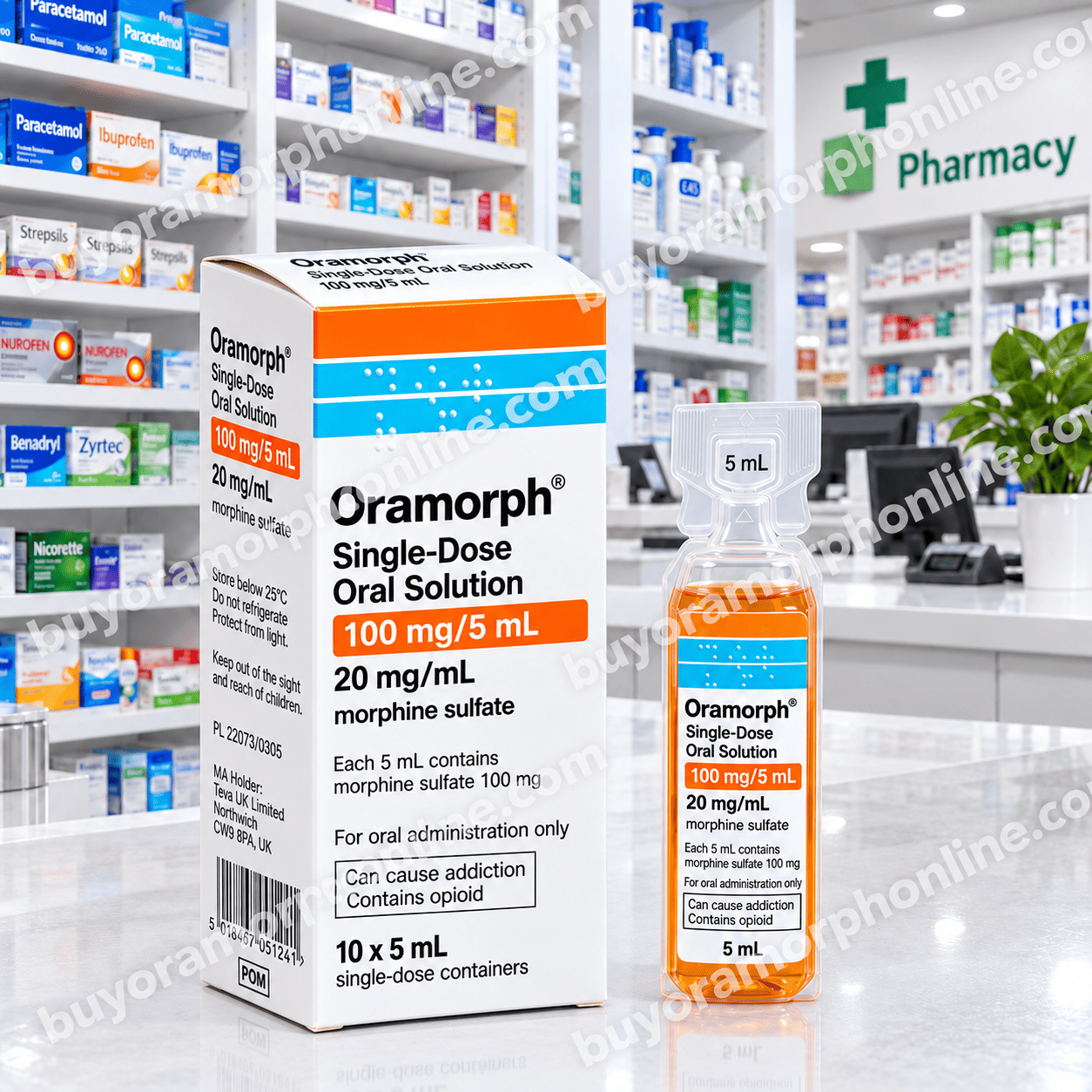
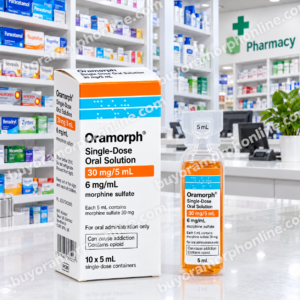
Oramorph Single Dose 100 mg/5 mL is a concentrated morphine sulfate oral solution containing 20 mg of morphine sulfate per millilitre. Each 5 mL unit-dose container contains 100 mg of morphine sulfate.
This prescription-only opioid medicine is authorised in France for the treatment of severe pain under professional medical supervision.
Oramorph Single Dose 100 mg/5 mL – Morphine Sulfate Oral Solution
Oramorph single dose 100 mg/5 mL is a concentrated oral morphine formulation containing morphine sulfate, a strong opioid analgesic used in the management of severe pain.
This formulation provides 100 mg of morphine sulfate in a 5 mL unit-dose container, equivalent to a concentration of 20 mg/mL.
Oramorph acts on opioid receptors within the central nervous system to reduce the perception of pain. It is intended for use only when a qualified healthcare professional considers opioid treatment clinically appropriate.
Because of its high concentration, Oramorph 100 mg/5 mL requires careful prescribing, accurate identification and appropriate medical supervision.
What Is Oramorph 100 mg/5 mL?
Oramorph is a branded medicine containing morphine sulfate.
Morphine belongs to a group of medicines known as opioid analgesics. These medicines affect how the brain and spinal cord process pain signals.
The 100 mg/5 mL single-dose formulation is supplied as a liquid intended for oral administration.
Unlike multidose bottles that contain several measured quantities of liquid, this formulation uses individual 5 mL containers.
However, a unit-dose container is not necessarily an appropriate individual dose for a particular patient.
The correct treatment depends entirely on medical assessment and prescription instructions.
Oramorph Single Dose 100 mg/5 mL – Product Specifications
| Specification | Details |
|---|---|
| Product name | Oramorph 100 mg/5 mL |
| Active ingredient | Morphine sulfate |
| Medicine category | Opioid analgesic |
| Formulation | Oral solution |
| Strength | 100 mg per 5 mL |
| Concentration | 20 mg/mL |
| Container volume | 5 mL |
| Administration route | Oral |
| Reference presentation | 10 × 5 mL single-dose containers |
| Container material | Polyethylene |
| Prescription status | Prescription-only controlled medicine |
| Verified market | France |
| ATC classification | N02AA01 |
The specifications above describe the formulation documented in the official French medicines database. Availability and authorised packaging may differ between countries.
What Is Oramorph Single Dose Used For?
Oramorph contains morphine, which may be prescribed for severe pain that requires treatment with a strong opioid.
Depending on the patient’s clinical circumstances, morphine may be considered for certain types of severe pain, including cancer-related pain and other conditions requiring specialist pain management.
A healthcare professional must assess whether the potential benefits of morphine outweigh its risks.
The treatment plan should consider the underlying medical condition, previous pain treatments, other medicines and the patient’s individual health requirements.
Oramorph is not appropriate for self-medication.
How Does Morphine Oral Solution Work?
Morphine acts on specific opioid receptors in the brain and spinal cord.
These receptors play an important role in how the nervous system processes painful sensations.
By affecting these receptors, morphine can reduce the perception of severe pain.
However, morphine also affects other body functions, including breathing, alertness and gastrointestinal activity.
This explains why opioid treatment requires careful medical monitoring.
Understanding the 20 mg/mL Concentration
The strength of Oramorph single dose 100 mg/5 mL can also be expressed as 20 mg/mL.
Both descriptions refer to the same concentration.
Patients and caregivers must distinguish between the concentration of the medicine, the volume of liquid and the prescribed amount.
Confusing morphine concentrations can result in severe or fatal medication errors.
Never substitute one concentration of morphine oral solution for another without explicit instructions from the prescriber and dispensing pharmacist.
Prescription Requirements and Medical Supervision
Oramorph 100 mg/5 mL is a prescription-only medicine.
Morphine is a controlled opioid because it carries risks of overdose, physical dependence, addiction and misuse.
A qualified healthcare professional should assess the patient before treatment and review opioid therapy when clinically necessary.
Medical assessment may include consideration of:
- The cause and severity of pain.
- Previous opioid exposure.
- Respiratory health.
- Kidney and liver function.
- Other prescription medicines.
- Potential medicine interactions.
- The patient’s risk of opioid-related complications.
For more information, read our Prescription Guidance.
Possible Side Effects of Oramorph
Like other opioid medicines, Oramorph can cause side effects.
Common effects of morphine include:
- Constipation.
- Nausea and vomiting.
- Drowsiness.
- Dizziness.
- Sweating.
- Confusion.
Some side effects can become serious and require immediate medical attention.
Serious Risks and Warning Signs
Morphine can cause potentially life-threatening respiratory depression.
Warning signs of an opioid overdose include dangerously slow or shallow breathing, extreme sleepiness, difficulty waking, loss of consciousness or blue or grey lips.
If an opioid overdose is suspected, contact emergency services immediately.
Administer naloxone if available and appropriate, following its instructions and emergency guidance.
Do not wait for symptoms to improve before seeking emergency assistance.
Important Medicine Interactions
Morphine may interact with other medicines that affect the central nervous system.
Combining morphine with certain sedatives, including benzodiazepines, may increase the risk of dangerous breathing problems, coma and death.
Alcohol can also increase the sedative effects of morphine.
Patients should inform their healthcare professional about all prescription medicines, over-the-counter products and other substances they use.
Do not combine medicines or change prescribed treatment without medical advice.
Tolerance, Dependence and Withdrawal
Tolerance and physical dependence can develop during repeated opioid treatment.
Physical dependence means that withdrawal symptoms may occur when a medicine is suddenly discontinued.
Addiction is a separate medical condition involving problematic, compulsive substance use.
Patients who have been taking morphine regularly should discuss any changes or plans to stop treatment with their prescriber.
The treatment plan should include appropriate monitoring and reassessment.
Storage and Handling Precautions
Oramorph should always be kept securely and away from children or anyone for whom it has not been prescribed.
Follow the storage instructions on the authorised product packaging and patient leaflet.
Do not use medicine after its expiry date.
Do not share prescribed morphine with another person, even if that person experiences similar pain symptoms.
Ask a pharmacist how to dispose of unused or expired opioid medicines safely.
For further information, see our Patient Safety Guide.
Frequently Asked Questions
1. What is Oramorph single dose 100 mg/5 mL?
It is a concentrated morphine sulfate oral solution supplied in 5 mL unit-dose containers. The formulation contains 100 mg of morphine sulfate per container.
2. Is Oramorph 100 mg/5 mL the same as 20 mg/mL?
Yes. Both descriptions indicate the same medicine concentration.
3. Is Oramorph single dose a prescription-only medicine?
Yes. Morphine is a controlled prescription opioid. It should only be used following appropriate medical assessment and prescribing.
4. Does single-dose packaging mean I should take the entire container?
No. The term describes the packaging format. It does not establish the correct amount for an individual patient. Only follow the instructions provided by the prescriber and pharmacist.
5. Can Oramorph 100 mg/5 mL cause dependence?
Yes. Morphine can cause physical dependence and carries a risk of addiction, particularly with repeated use. Patients should discuss these risks with their healthcare professional.
6. What are the most common side effects?
Common side effects include constipation, nausea, vomiting, dizziness and drowsiness. Seek professional advice if you experience persistent or concerning symptoms.
7. Can Oramorph interact with other medicines?
Yes. Certain sedatives, other opioids and medicines affecting the central nervous system may increase the risk of serious adverse effects. A healthcare professional should review potential interactions.
8. Where can I find official product information?
The French Public Medicines Database provides information about the authorised Oramorph 100 mg/5 mL formulation, including its composition, packaging, prescription requirements and official product documentation.
Further Oramorph Information
Understanding the strength, formulation and safety requirements of Oramorph 100 mg/5 mL is important for informed discussions about pain treatment.
Patients should consult their prescriber or pharmacist for information about whether a particular morphine formulation is appropriate for them.
Additional educational resources are available through our Oramorph Information Website and Frequently Asked Questions.
Medical disclaimer: This information is provided for general education. It does not replace professional medical advice, authorise medicine supply or establish the product’s availability in any particular country.
Be the first to review “Oramorph single dose 100 mg/5 mL”
Related products

10 ml of oramorph
2 reviews for Oramorph single dose 100 mg/5 mL
There are no reviews yet.