

20mg Oramorph – Morphine Oral Solution, Strength and Patient Safety
20mg Oramorph is a search term associated with morphine sulfate, a strong prescription opioid used to manage severe pain under medical supervision.
Oramorph is available in different oral liquid formulations. One recognised formulation is Oramorph concentrated oral solution containing 20mg of morphine sulfate per millilitre.
However, the expressions 20mg Oramorph and 20mg/ml Oramorph do not mean the same thing. Understanding this distinction is essential for safe medicine use.
At BuyOramorphOnline.com, this guide explains morphine oral solution, its medical uses, prescription requirements, possible side effects and important safety precautions.
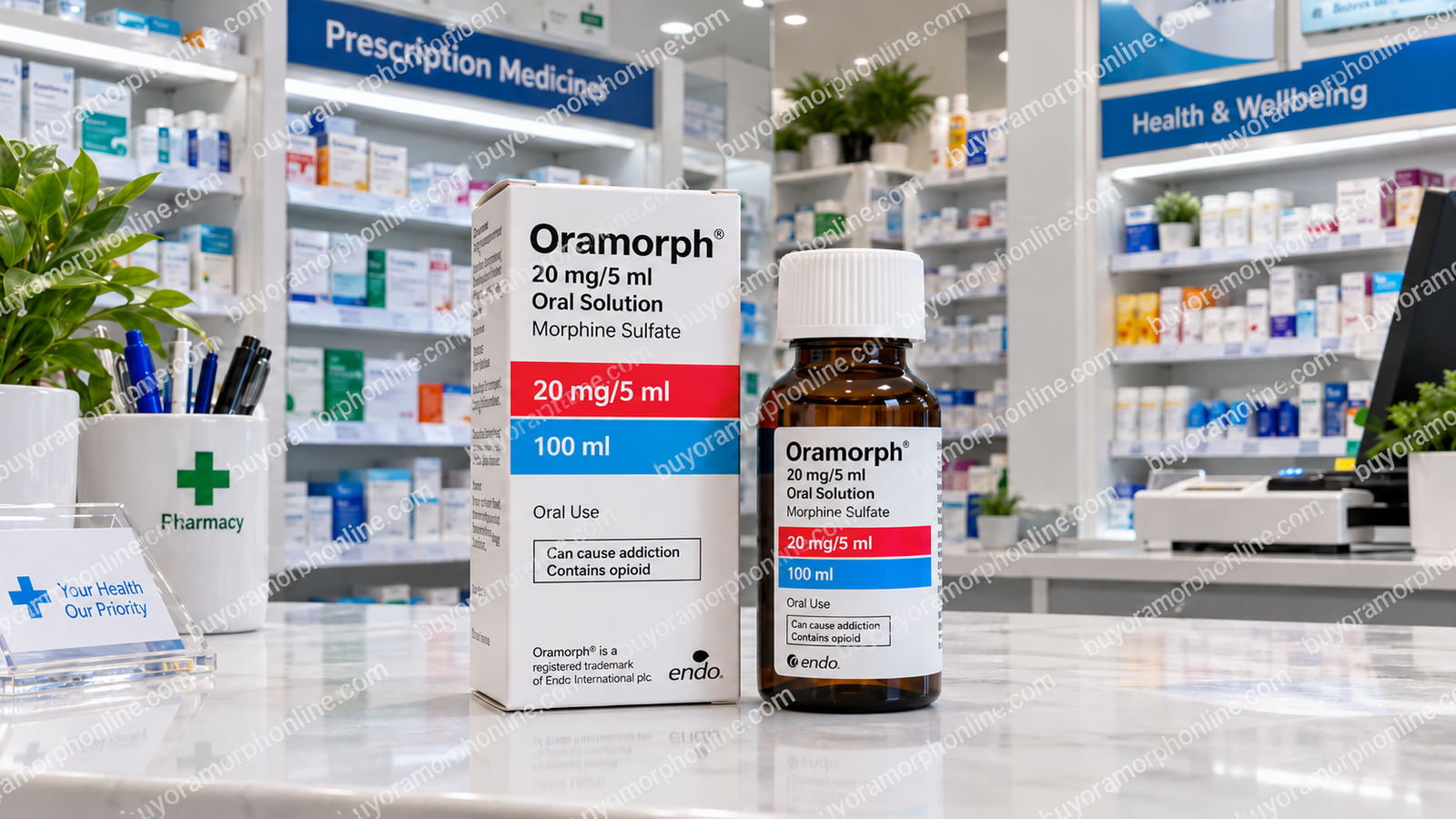
What Is 20mg Oramorph?
Oramorph is a brand of morphine sulfate oral medicine.
Morphine belongs to a group of strong painkillers known as opioid analgesics. These medicines act on opioid receptors in the central nervous system to change how pain is experienced.
The term 20mg describes a quantity of morphine, but does not independently identify a particular medicine formulation.
By contrast, Oramorph concentrated oral solution 20mg/ml describes a liquid concentration.
Healthcare professionals use the complete product name, concentration and prescription instructions to identify the appropriate medicine.
Patients should never make assumptions about their treatment based on the words “20mg Oramorph” alone.
Understanding Oramorph 20mg/ml Concentrated Oral Solution
Oramorph concentrated oral solution contains morphine sulfate at a concentration of 20mg/ml.
This is different from the standard 10mg/5ml Oramorph oral solution, which has a concentration of 2mg/ml.
The concentrated formulation is ten times as strong per millilitre as the standard formulation.
This difference creates a significant risk of medication errors and accidental overdose.
For that reason, patients should check the exact concentration on their prescription and dispensing label.
The concentrated formulation should only be used according to instructions supplied by an appropriately qualified healthcare professional.
Oramorph Medicine Information
| Specification | Information |
|---|---|
| Brand | Oramorph |
| Active ingredient | Morphine sulfate |
| Medicine type | Opioid analgesic |
| Recognised concentrated strength | 20mg/ml |
| Administration | According to the prescribed product instructions |
| Legal classification | Prescription-only controlled medicine |
| Medical supervision | Required |
| Main safety concerns | Respiratory depression, dependence, interactions and overdose |
The authorised formulation, packaging and availability may vary between countries.
Patients should always consult the official patient information leaflet supplied with their medicine.
What Is Oramorph Used For?
Morphine may be prescribed for severe pain when a healthcare professional considers opioid treatment appropriate.
Possible clinical situations include:
Severe Pain Following Surgery
Some patients experience significant pain after surgical procedures.
A clinician may consider morphine as part of a supervised pain management plan when appropriate.
Pain Following Serious Injury
Certain injuries may produce severe pain requiring medical treatment.
The choice of painkiller depends on the injury, the patient’s condition and other clinical factors.
Cancer-Related Pain
Morphine may be used in the management of severe cancer-related pain.
Treatment should be individualised and monitored by an appropriate healthcare professional.
Palliative Care
Morphine is also used in some palliative care settings to help manage severe pain and certain distressing symptoms.
The need for treatment and the appropriate formulation must be determined by a qualified clinician.
Why Does 20mg Oramorph Require a Prescription?
Oramorph contains morphine, a controlled opioid with important medical benefits and significant risks.
A valid prescription is necessary to help ensure the medicine is appropriate for the individual patient.
Before prescribing morphine, a healthcare professional may assess:
- The patient’s condition and pain history.
- Previous and current pain treatments.
- Other prescription and non-prescription medicines.
- Existing breathing problems.
- Kidney and liver conditions.
- Potential medicine interactions.
- Risks of dependence, misuse and overdose.
Prescription medicines should only be used by the person for whom they were prescribed.
Read our Oramorph Prescription Guidance for additional information.
Important Safety Precautions for Concentrated Morphine
Concentrated morphine oral solution requires particular care because small differences in liquid volume can represent substantial differences in the amount of morphine.
Patients should:
- Follow their individual prescription instructions.
- Check the medicine concentration carefully.
- Use the calibrated measuring device provided or recommended by their pharmacist.
- Never substitute a different morphine concentration without professional guidance.
- Avoid changing the prescribed amount independently.
- Keep the medicine securely stored.
- Never share prescription opioids with anyone else.
If any instructions are unclear, patients should contact the dispensing pharmacist before taking the medicine.
Possible Side Effects of Oramorph
Like other opioid medicines, Oramorph can cause side effects.
Common Side Effects
Common effects may include constipation, nausea, vomiting, dizziness, sleepiness and confusion.
A healthcare professional can advise on the management of persistent or troublesome symptoms.
Respiratory Depression
Morphine can slow breathing.
This risk is particularly serious in an overdose or when morphine is combined with other medicines that cause sedation.
Tolerance and Dependence
Regular opioid use can lead to physical dependence or tolerance.
Morphine also carries a risk of addiction.
Patients should discuss concerns about dependence with their prescribing clinician.
Serious Adverse Effects
Extreme drowsiness, slow or shallow breathing, unconsciousness or difficulty waking someone may indicate an opioid overdose.
A suspected opioid overdose is a medical emergency. Contact emergency services immediately.
Interactions With Other Medicines
Morphine can interact with other medicines and substances.
Certain sleeping medicines, benzodiazepines, other opioids and medicines that cause sedation may increase the risk of serious adverse effects.
Alcohol can also increase drowsiness and breathing problems.
Always inform your prescriber or pharmacist about all medicines and supplements you use.
How Should Oramorph Be Stored?
Morphine should be kept securely to prevent accidental exposure.
Follow the storage instructions on the original medicine packaging.
Important precautions include:
- Keep the medicine out of the sight and reach of children.
- Retain the original dispensing label.
- Never share prescribed medication.
- Check the expiry date.
- Return unwanted medicine to a pharmacy for safe disposal.
For further guidance, read our Patient Safety Guide.
Frequently Asked Questions About 20mg Oramorph
1. What is 20mg Oramorph?
The term may refer to an amount of morphine. It should not be confused with Oramorph concentrated oral solution 20mg/ml, which identifies a medicine concentration.
2. Is Oramorph 20mg/ml a concentrated formulation?
Yes. A 20mg/ml oral morphine solution is a recognised concentrated formulation.
3. Is 20mg/ml the same as 10mg/5ml?
No. The concentrated 20mg/ml formulation contains ten times as much morphine per millilitre as the 10mg/5ml solution.
4. Is Oramorph available without a prescription?
No. Oramorph is a prescription-only medicine in the United Kingdom.
5. Can Oramorph cause addiction?
Yes. Morphine carries a risk of addiction, tolerance and physical dependence.
6. What are the most common side effects?
Common side effects include nausea, constipation, dizziness, drowsiness and vomiting.
7. Can I take Oramorph with alcohol?
Alcohol should be avoided while taking morphine because it can increase sedation and the risk of serious side effects.
8. Is concentrated Oramorph suitable for everyone?
No. The appropriate medicine and formulation depend on the patient’s clinical circumstances and prescription.
9. Can I change my morphine concentration?
Patients must not substitute one concentration for another without direct guidance from a qualified healthcare professional.
10. Where can I find reliable Oramorph information?
Consult your prescriber, dispensing pharmacist and the official patient information leaflet.
You can also visit the NHS morphine medicine guide.
Learn More About Oramorph and Prescription Safety
Understanding the differences between morphine doses, concentrations and formulations is essential for safe opioid treatment.
BuyOramorphOnline.com provides educational information about Oramorph, prescription requirements and patient safety.
Explore our About Oramorph page or visit our Frequently Asked Questions for more information.
For questions about your prescribed medicine, speak directly to your healthcare professional or pharmacist.
Medical disclaimer: This content provides general educational information only. It does not constitute individual medical advice, prescribing guidance or an offer to supply medicines.

10 ml of oramorph