

Oramorph Oral Solution 10mg/5ml – Morphine Sulfate Information and Safety Guide
Oramorph oral solution 10mg/5ml is a liquid medicine containing morphine sulfate, a strong opioid painkiller used to manage severe pain under medical supervision.
The concentration indicates that every 5ml of solution contains 10mg of morphine sulfate. This is equivalent to 2mg/ml.
Morphine can provide important pain relief when appropriately prescribed. However, it also carries risks of serious side effects, dependence and overdose.
At BuyOramorphOnline.com, this educational guide explains the medicine’s concentration, medical uses, prescription requirements and essential safety considerations.
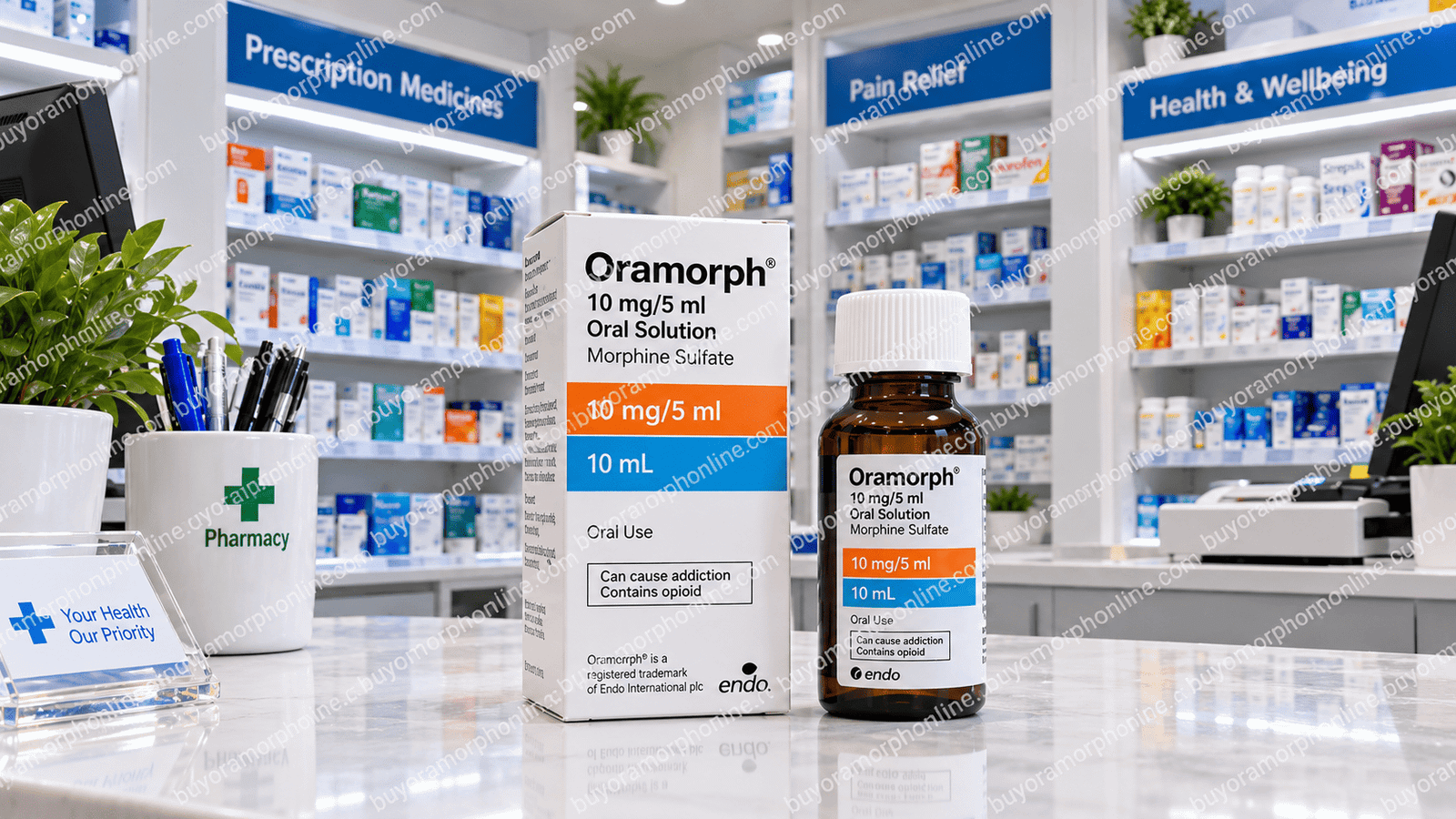
What Is Oramorph Oral Solution 10mg/5ml?
Oramorph is a brand of medicine containing morphine sulfate.
Morphine belongs to a group of medicines called opioid analgesics. It acts on receptors in the central nervous system, changing how the body processes and experiences pain.
Oramorph oral solution is taken by mouth and may be suitable when a prescriber considers a liquid formulation appropriate.
The medicine must be measured carefully because different morphine oral solutions may have different concentrations.
Oramorph 10mg/5ml and 2mg/ml describe the same concentration. This does not mean that every morphine oral solution has the same strength.
Patients should always verify the full medicine name, concentration and prescribed instructions.
Understanding Oramorph 10mg/5ml Specifications
The following table describes the medicine’s general characteristics.
| Specification | Information |
|---|---|
| Medicine name | Oramorph Oral Solution |
| Active ingredient | Morphine sulfate |
| Strength | 10mg/5ml |
| Equivalent concentration | 2mg/ml |
| Pharmaceutical form | Oral solution |
| Medicine class | Opioid analgesic |
| Route of administration | Oral |
| UK prescription status | Prescription-only |
| Primary medical use | Management of severe pain |
Packaging, ingredients and authorised presentations may differ according to the manufacturer and country.
Always refer to the official leaflet accompanying the specific medicine dispensed.
What Is Oramorph Oral Solution Used For?
Oramorph contains morphine, which may be prescribed for severe pain when clinically appropriate.
Examples of medical circumstances where morphine may be considered include the following.
Severe pain following surgery
Some surgical procedures cause significant pain during recovery.
A healthcare professional may consider morphine as part of a carefully monitored pain-management plan.
Severe pain following injury
Serious injuries may require strong pain relief under medical supervision.
The decision to prescribe morphine depends on the injury, the patient’s medical history and available treatment alternatives.
Cancer-related pain
Patients with cancer may experience pain that requires specialist assessment and treatment.
Morphine can form part of an individual pain-management plan.
Palliative care
Morphine may be prescribed for severe pain during palliative care.
Healthcare professionals consider the patient’s symptoms, comfort and individual treatment requirements.
Not every patient with pain requires morphine. A qualified clinician must determine the most appropriate treatment.
Why Does Oramorph Require a Prescription?
Oramorph is a prescription-only medicine in the United Kingdom.
Morphine affects the central nervous system and can cause serious harm if used incorrectly.
Important risks include:
- Respiratory depression.
- Excessive sedation.
- Physical dependence.
- Addiction.
- Dangerous medicine interactions.
- Potentially fatal overdose.
Before prescribing, a healthcare professional may review the patient’s medical history, existing conditions, previous treatments and other medicines.
Patients must not use morphine prescribed to another person.
For additional information, read our Oramorph Prescription Guidance.
Understanding Morphine Oral Solution Concentration
Medicine concentration is one of the most important details on an oral morphine label.
The strength 10mg/5ml means that 5ml of the liquid contains 10mg of morphine sulfate.
The equivalent concentration is 2mg/ml.
However, the concentration is not the same as an individual prescription instruction.
A healthcare professional determines the appropriate treatment for each patient.
Different liquid morphine products can contain different concentrations, and confusing them may cause serious medication errors.
Patients should never change their prescribed amount or switch between formulations without professional guidance.
How Should Oramorph Oral Solution Be Measured?
Accurate measurement is essential when using morphine oral solution.
Patients should follow the instructions provided by their prescriber and dispensing pharmacist.
A calibrated oral syringe or another suitable measuring device may be used according to the product instructions.
Important precautions include:
- Checking the medicine’s concentration before use.
- Following the individual prescription label.
- Using the supplied or recommended measuring device.
- Avoiding household teaspoons.
- Never guessing a quantity.
- Asking a pharmacist about unclear instructions.
Do not increase the prescribed amount or change the treatment schedule independently.
Possible Side Effects of Oramorph
Like all medicines, Oramorph can cause side effects.
Some are relatively common, while others require urgent medical attention.
Constipation
Morphine can slow bowel movements, making constipation a common side effect.
A healthcare professional may recommend suitable measures to prevent or manage this problem.
Nausea and vomiting
Some patients experience nausea or vomiting, particularly when beginning opioid treatment.
Persistent or severe symptoms should be discussed with a clinician.
Drowsiness and dizziness
Morphine can cause sleepiness, dizziness and reduced concentration.
Patients must avoid driving or operating machinery when affected.
Confusion
Morphine may cause confusion or changes in awareness, particularly in people who are sensitive to its effects.
Serious breathing problems
Morphine can dangerously slow breathing.
Symptoms such as severe breathing difficulty, unconsciousness or extreme difficulty waking someone may indicate an overdose.
A suspected opioid overdose is a medical emergency. Contact emergency services immediately.
Read our Patient Safety Guide for further information.
Oramorph and Other Medicines
Morphine may interact with other medicines and substances.
Particular caution is necessary with medicines that cause sedation, including certain sleeping tablets, anxiety medicines and other opioids.
Combining morphine with alcohol can increase drowsiness and the risk of dangerous breathing problems.
Always tell your prescriber or pharmacist about prescription medicines, over-the-counter products and supplements.
Do not combine medicines or change opioid treatment without professional advice.
Safe Storage of Oramorph Oral Solution
Morphine must be stored securely to reduce the risk of accidental ingestion, misuse and medication errors.
Patients should:
- Keep the medicine in its original labelled packaging.
- Follow the specific product’s storage instructions.
- Store it securely away from children.
- Check the expiry date and instructions after opening.
- Never share prescription morphine.
- Return unused medication to a pharmacy for appropriate disposal.
Some formulations have specific requirements for storage after opening. These should be checked in the accompanying patient information leaflet.
Frequently Asked Questions About Oramorph Oral Solution 10mg/5ml
1. What is Oramorph oral solution 10mg/5ml?
It is a liquid formulation containing morphine sulfate at a concentration of 10mg per 5ml. It is a prescription-only opioid medicine used for severe pain.
2. Is Oramorph 10mg/5ml the same concentration as 2mg/ml?
Yes. Both expressions describe the same morphine sulfate concentration.
3. Is Oramorph the same as morphine?
Oramorph is a brand name for a medicine containing morphine sulfate. Other morphine products may have different strengths and formulations.
4. Can Oramorph be obtained without a prescription?
No. Oramorph is a prescription-only medicine in the United Kingdom.
5. What are the common side effects?
Common side effects include constipation, nausea, vomiting, dizziness and sleepiness.
6. Can Oramorph cause addiction?
Yes. Morphine carries a risk of addiction. Physical dependence and tolerance can also develop during treatment.
7. Can Oramorph interact with other medicines?
Yes. Some medicines may increase sedation or breathing risks when combined with morphine. A healthcare professional should review potential interactions.
8. Can I stop taking Oramorph suddenly?
Regular opioid use can cause physical dependence. Abruptly stopping treatment may lead to withdrawal symptoms. Discuss changes with your prescriber.
9. How should Oramorph oral solution be measured?
Use the appropriate calibrated oral measuring device and follow your individual prescription instructions.
10. Where can I find reliable Oramorph information?
Consult your prescribing clinician, pharmacist or official patient information leaflet.
You can also read the NHS morphine medicine guide.
Further Information About Oramorph
Understanding the concentration, prescription requirements and safety precautions associated with morphine oral solution is important for responsible treatment.
For additional educational information, explore our About Oramorph page and Frequently Asked Questions.
Patients with questions about their prescribed medicine should speak directly with their healthcare professional.
Medical disclaimer: This category contains educational information and does not provide individual prescribing advice, establish product availability or replace professional medical care.


oramorph oral solution 10mg/5ml

10 ml of oramorph


oramorph oral solution 10mg/5ml